
What actually breaks first in AI data center projects?

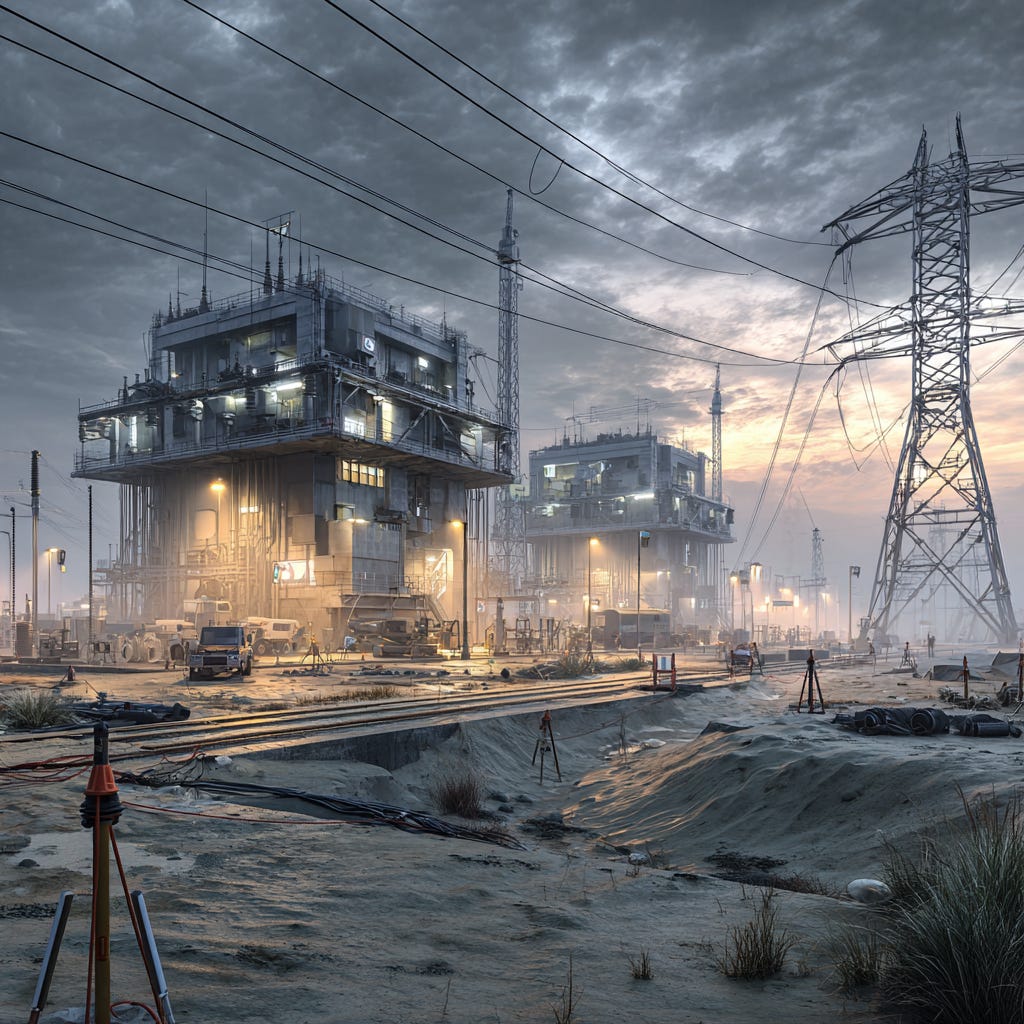
Power timelines break first. Then political tolerance. Then capital patience.
That is the order. Not because people are careless or malicious, but because the system is being asked to move faster than its physical and institutional limits allow.
Most AI data center failures do not begin with bad technology or weak demand. They begin with optimism. Optimism that exponential AI curves can compress grid physics. Optimism that abundant capital can outrun permitting. Optimism that modular construction somehow shortens interconnection studies. Optimism that communities will stay quiet once timelines stretch and benefits remain theoretical.
This keeps surprising people because everything upstream looks so convincing. AI demand really is growing fast. Capital really is available at a scale few infrastructure sectors have ever seen. Vendors really do promise speed, modularity, and flexibility. Slide decks show neat phases, clean ramps, and elegant timelines.
But none of that changes how electricity systems work. None of it rewrites utility governance. None of it accelerates transmission siting, environmental review, or cost allocation fights. The laws of physics and politics do not care how urgent the workload feels.
There is a governing rule that most underwriting still fails to respect. Data center risk is front loaded and non linear. Early assumptions compound. Late fixes rarely work.
When something breaks, it is almost never the last thing you touched. It is the first thing you waved through.
Power timelines break first
The first fracture usually happens quietly, inside an interconnection study.
A project enters the queue with reasonable assumptions. Load size seems manageable. Upgrade scope looks modest. Timelines appear long but tolerable. Then conditions change. Other projects enter the queue. Grid models are rerun. Reliability margins tighten. Suddenly the study is restated or delayed. Costs move. Timelines slip.
This is not malice. It is arithmetic. Grids plan conservatively because failure is catastrophic. When dozens of large loads stack up, every assumption gets stress tested. What looked like a two year path to power becomes four. What looked like a known upgrade becomes a regional transmission issue.
By the time this shows up in a deal, optionality is already shrinking. Land is tied up. Capital is soft committed. Public narratives are forming. Power is no longer an input. It is the constraint that dictates everything else.
Political tolerance breaks next
Once timelines stretch, politics enter whether anyone invited them or not.
Communities were often told a simple story. Jobs. Tax base. Innovation. Fast delivery. When years pass and construction has not meaningfully begun, patience erodes. Benefits feel abstract. Costs feel local. Water, noise, traffic, power bills, and land use suddenly dominate the conversation.
This is when moratoriums appear. Not as ideology, but as a pause button. Local officials buy time because the project no longer feels legible. The original promise was speed and certainty. What they now see is duration and ambiguity.
At that point, even technically sound projects become politically exposed. Opposition escalates not because data centers are new, but because trust has decayed.
Capital patience breaks last
Capital is remarkably forgiving early and remarkably unforgiving late.
Investors will tolerate complexity. They will tolerate scale. They will tolerate long timelines if they are understood and controlled. What they do not tolerate is uncertainty that grows over time.
When power timelines slip and politics heat up, capital begins to ask different questions. Carry costs rise. Return profiles blur. Exit assumptions weaken. What once looked like disciplined infrastructure starts to resemble open ended risk.
This is when projects quietly stall. Not with dramatic failure, but with capital stepping back, repricing, or waiting. The deal is not killed. It simply never closes.
None of this shows up in glossy underwriting decks. Those decks still show megawatts, square footage, and headline tenants. What they rarely show is the fragility of the early assumptions that everything depends on.
What this means for decision makers
Investors should underwrite schedule as a core variable, not a footnote. Time to power is not a nuisance. It is the asset. If you do not control it, you do not control the deal.
Developers should stop treating power as a checkbox and start treating it as the project itself. Land without power realism is not optionality. It is exposure.
Policymakers should recognize that uncertainty is more corrosive than denial. Clear constraints allow markets to adapt. Ambiguity invites overreach, backlash, and stalled capital.
The AI data center boom is real. Demand is not the problem. Capital is not the problem. Technology is not the problem.
Sequencing is.
Most data center projects fail before they are ever priced.