
Powered Land Is Replacing Traditional Site Selection

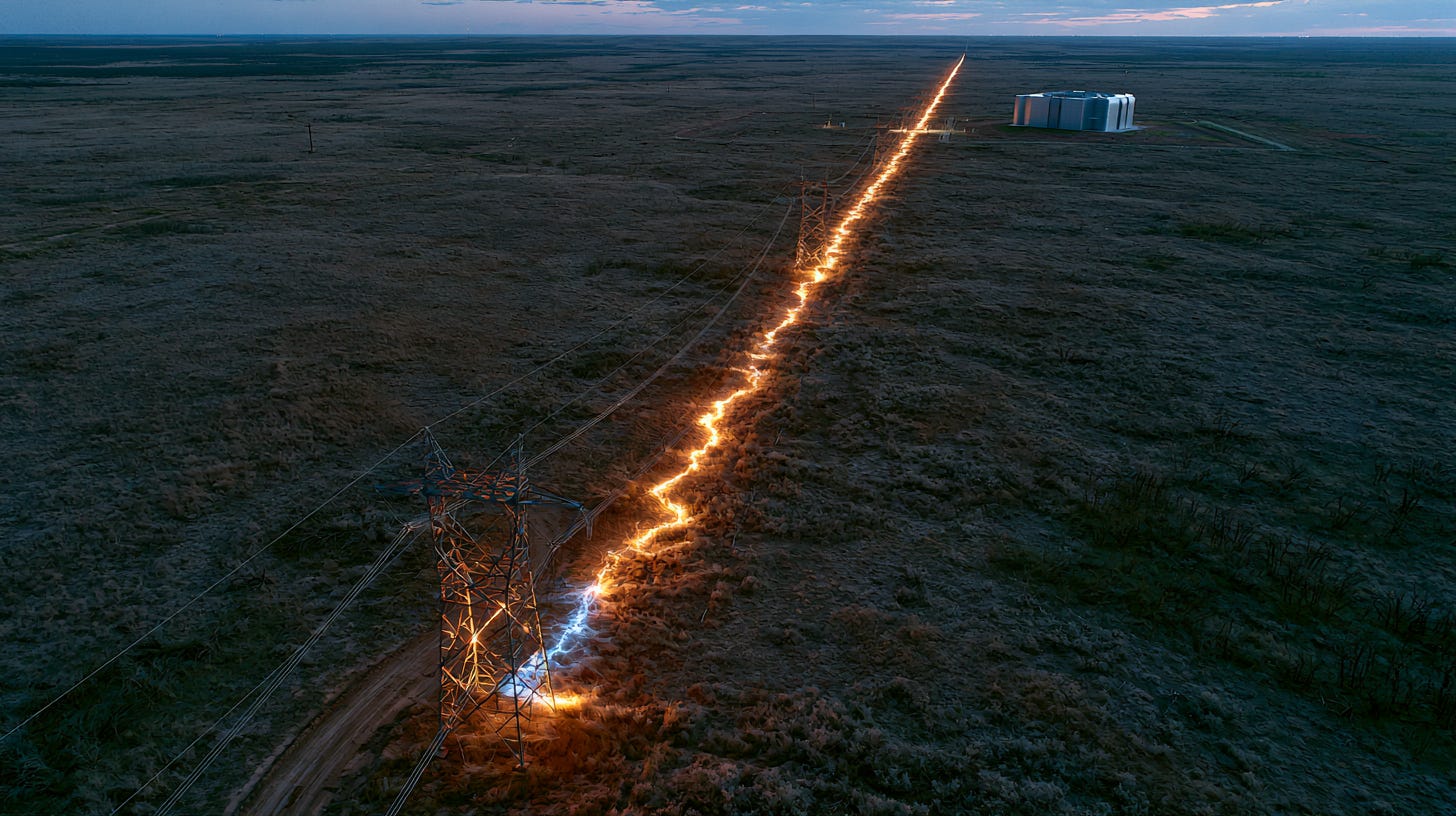
Real estate has one commandment older than almost any zoning code in America, location, location, location. I think that commandment just got rewritten for the first time in a century, and the rewrite has nothing to do with school districts, highway access, or proximity to a downtown core.
The new commandment is power, power, power. Two deals from the same week show exactly how far that shift has already traveled, at completely opposite ends of the size spectrum.
The Big One
MARA Holdings agreed to acquire a more than 1,200 acre site in Matagorda County, Texas, structured entirely around milestone payments that could total 600 million dollars if the company hits its power targets. The deal grants access to up to 2 gigawatts of grid capacity by 2028. Do the simple division and that works out to roughly 300,000 dollars per megawatt, a figure that crystallizes exactly how expensive defensible power infrastructure has become.
Here is the detail that matters most. MARA signed this deal without a single high performance computing tenant lined up. It paid for the power path itself, on the bet that owning 2 gigawatts of grid access in Texas is valuable independent of who eventually leases it, which makes this closer to buying an option on electricity than a real estate transaction in any traditional sense.
The Small One
A few counties over, a much smaller company called Big Digital Energy struck a very different sized version of the same bet. Its joint venture with 10NetZero covers roughly 50 acres in Hood County, a fraction of a percent of what MARA just bought. But that 50 acre site already carries 17 megawatts of live operational power, expandable to 111 megawatts of grid capacity, and as much as 311 megawatts if the partners add behind the meter generation using natural gas pipelines already running through the property.
Fifty acres. Up to 311 megawatts. Compare that ratio to a conventional greenfield site with no existing power infrastructure at all, and you start to see why acreage alone has stopped being a useful way to price a data center site.
The Extreme Version
If you want to see what happens when this logic gets pushed to its limit, look at what is happening across the rest of Texas right now. ERCOT’s interconnection queue for large loads has swelled to roughly 230 gigawatts of requested capacity. Only about 7.5 gigawatts of that is actually data center load connected to the grid today.
That gap, more than 30 times the capacity actually online, is the shadow grid forming in real time. Developers who cannot wait years for a place in that queue are building their own gas fired power plants directly behind the meter instead, avoiding the grid connection process entirely, which is the same instinct behind both the MARA and Big Digital deals taken to its most extreme conclusion. If you cannot buy your way into someone else’s power path fast enough, you build your own.
Why Acreage Stopped Being the Asset
For most of the history of site selection, land was valued for what could be built on top of it. Zoning, access, proximity to labor and customers, all of that mattered more than what ran underneath the property line. Data center site selection has quietly inverted that logic, and the land is now largely a container for the power path running through it, with its value rising or falling almost entirely based on how fast and how much electricity can reach it.
This is why a 50 acre site with a real interconnection agreement can be worth more than a 1,000 acre site with none, and why a company will pay hundreds of millions of dollars for grid access before it has signed a single tenant.
What This Means for Capital Allocators
If you are underwriting a site right now, the acreage figure on the term sheet should be one of the least important numbers in the entire deal. What actually matters is the interconnection timeline, the megawatts already live versus the megawatts still theoretical, and whether the seller’s power path survives contact with the utility’s own queue and tariff requirements. A site with modest acreage and a proven, expandable power path is a better asset than a large parcel sitting somewhere near the back of an interconnection queue that may take years to clear.
The allocators who internalize this fastest will be the ones pricing deals correctly while everyone else is still comparing price per acre. Price per deliverable megawatt is the only number that actually tells you what you are buying.
PLUS: If this sparked an idea or made you think differently about AI infrastructure, here are four ways we can continue the conversation.
1. Grab the guide.
Before advancing a data center site, there are 12 questions I make sure I can answer. I wrote them up here: [The 12 Questions Every Real Estate Professional Should Ask Before Advancing a Data Center Site].
2. Ask me a question.
If you’re looking at a deal, powered land opportunity, site, or AI infrastructure project and something doesn’t quite add up, reply and tell me what you’re seeing. Each week, I choose a handful of questions and share how I would think through them.
3. Clarify your positioning.
Trying to figure out where you fit in AI infrastructure? Whether you come from real estate, energy, construction, finance, telecom, technology, or another industry, reply with “Positioning” and a few lines about your background. I’ll share where I think your experience is most likely to create leverage as the market evolves.
4. Advisory Conversations.
I advise developers, investors, utilities, technology companies, and public sector organizations navigating AI infrastructure strategy. If you’re exploring growth, site selection, market positioning, partnerships, or board-level decisions, reply with “Advisory” and a brief description of what you’re working on.