
The Augusta Illusion

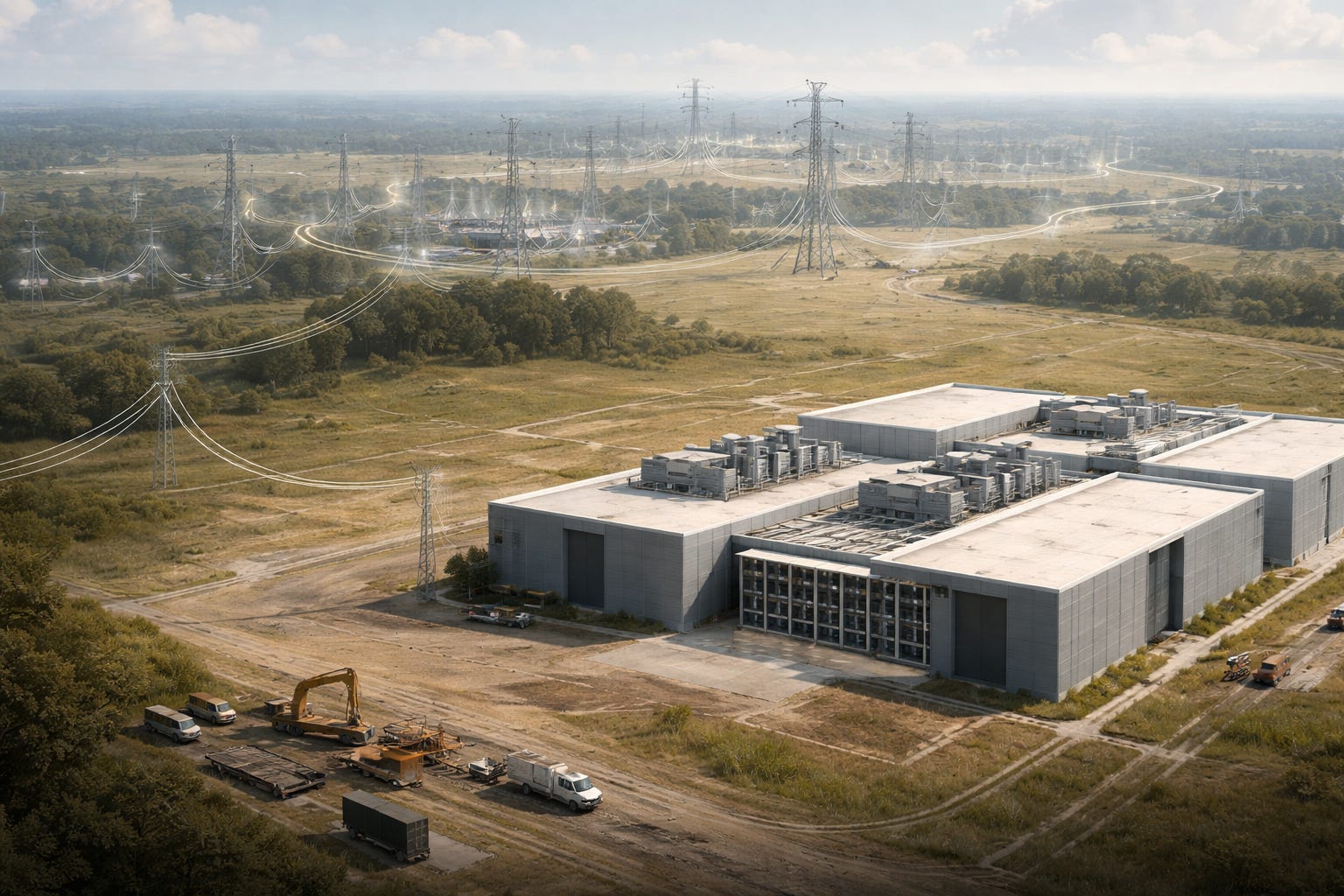
There is a moment in almost every data center deal when the spreadsheet says yes and reality says not yet.
In Augusta, Georgia, a $2 billion project called Project Eisenhower by QTS Data Centers looks like a textbook win. The land is there. The capital is committed. The demand is obvious. This is exactly the kind of project that should move fast in a market defined by urgency.
But it is not moving fast.
The project is now sitting in the interconnection queue, waiting for permission to access the regional power grid. And that wait is not measured in months. It is measured in years.
That is the part most people miss.
From the outside, the constraint appears to be land or capital or even permitting. Inside the system, none of those are the bottleneck. The real constraint is sequencing. The project cannot move forward until the grid studies are completed, the upgrades are identified, the costs are allocated, and the timeline is assigned. Only then does power become real instead of theoretical.
This is where the illusion breaks.
Developers talk about megawatts as if they are inventory. But the grid does not deliver inventory. It delivers power on a schedule that it controls. That schedule depends on engineering studies, transmission upgrades, and a queue filled with other projects competing for the same electrons.
So even a fully capitalized hyperscale project becomes a waiting game.
You can own the land. You can secure the tenant. You can raise the money. None of it matters if you do not control when power arrives.
In Augusta, the lesson is simple and uncomfortable. The developer is not in charge of the timeline. The grid is.
The Rise of Invisible Gatekeepers
If you step back from Augusta and look across the market, a pattern starts to emerge that is easy to miss if you are still thinking like a traditional real estate developer.
We are no longer in a world where land, capital, and entitlements determine what gets built.
We are in a world where invisible systems determine what gets built.
The interconnection queue is one of those systems. It does not show up in marketing materials. It is not something you can drive by. But it quietly decides which projects move forward and which ones stall out.
And it does something even more powerful. It reshapes risk.
In traditional development, risk was tied to demand. Would tenants show up. Would rents justify the cost. Would capital stay available. Those risks still exist, but they are no longer the first question.
The first question now is timing.
When does power actually arrive. Not when it is promised. Not when it is announced. When it is delivered and usable at the site.
That shift changes everything.
It means two identical sites with the same acreage and the same zoning can have completely different values depending on their position in a queue that most investors never see. It means a project that looks viable on paper can become unfinanceable once real timelines are introduced. It means speed is no longer a function of execution alone. It is a function of system access.
This is the core of what I call Digital Dirt.
Digital Dirt is not just land with power nearby. It is land where power arrives on a timeline that matches capital and demand. It is land where the sequencing works.
Augusta shows what happens when it does not.
The next phase of this market will not be won by the groups that assemble the most land or announce the largest megawatts. It will be won by the groups that understand how to navigate these invisible gatekeepers. The queue. The studies. The upgrades. The sequencing.
Because in this market, the real asset is not the land.
It is the timeline.